
Symposium Speakers
Casey Barton Behravesh Keynote Speaker
MS, DVM, DrPH, DACVPM

Dr. Casey Barton Behravesh is a nationally and internationally recognized leader in the One Health approach. She serves as Director of CDC’s One Health Office and holds the rank of Captain in the U.S. Public Health Service. During her extensive CDC career, she has investigated outbreaks in the field, responded to numerous public health emergencies, led national surveillance systems, conducted epidemiologic research, and improved One Health systems in the United States and globally. Her work helps prevent and control One Health threats including zoonotic, foodborne, vector-borne diseases, and other One Health threats. Dr. Barton Behravesh is a founding leader of the U.S. One Health Coordination Unit, and has received numerous awards recognizing her leadership, mentorship, and service.
Chance Armstrong
DVM, MS, DACT

Dr. Chance Armstrong is a native of southeast Alabama and Auburn University alumnus who earned his Bachelor’s, Master’s, and DVM degrees from Auburn. A Diplomate of the American College of Theriogenologists, he serves as Clinical Associate Professor in Auburn’s J.T. Vaughan Large Animal Teaching Hospital, specializing in livestock medicine and reproduction. Dr. Armstrong has extensive experience in veterinary disaster response, including deployments with the Louisiana State Animal Response Team following Hurricanes Harvey, Michael, Laura, and Ida. In 2023, he helped establish the Auburn Veterinary Emergency Response Team (AVERT) and serves as its director, leading Auburn’s multidisciplinary effort to provide veterinary emergency response and animal support during natural and human-caused disasters.
Jennifer Drey
MPH

Jennifer Drey is a public health professional with a passion for boots-on-the-ground community engagement strategies. She currently serves as Community Outreach Coordinator at the Institute for Health Logistics & Analytics, where she has extensive experience building relationships in communities across rural Georgia. Her current work includes leading the IHLA’s Rural Opioid Harm Reduction (ROHR) for Libraries project and its Care Stations in Rural Georgia project, both of which focus on building partnerships with public libraries in rural communities. With a background in communications, Jennifer is skilled at evaluating evidence-based literature and turning it into points of action. Her past work includes contributing to IHLA’s Community Health Resource Project (CHRP), through data collection, relationship building, and reporting. Jennifer holds a Master of Public Health in Prevention Science from Emory University and a Bachelor of Arts in Journalism from the University of Maryland.
Kelly Franklin (Stevens)
MS

Kelly Franklin (Stevens) is the Director of the Bureau of Communicable Disease for the Alabama Department of Public Health (ADPH). Kelly has a Master of Science focusing on Entomology (insects) and Acarology (ticks and mites). She began her public health career as an Entomologist, then as Entomologist-Director of the Mobile County Health Department’s Vector Control Program, and later as Director of the Bureau of Environmental Protection. Kelly transitioned to ADPH, where she directed the Infectious Diseases & Outbreaks Division (ID&O) for 15 years prior to her current position. Kelly oversees division activities within her bureau, including the Divisions of ID&O, Immunizations, Sexually Transmitted Disease, and Tuberculosis Control.
Tony Frazier
DVM

Dr. Tony Frazier has served as Alabama State Veterinarian since 2001. A 1988 graduate of Auburn University College of Veterinary Medicine, he worked in mixed-animal private practice before joining the Alabama Department of Agriculture and Industries in 1995. In his current role, he oversees Alabama’s animal health, diagnostic laboratory, meat inspection, and poultry programs. Dr. Frazier is widely recognized for his leadership in animal disease preparedness, emergency response, and disease traceability, including development of Alabama’s avian influenza response plan. He has held numerous state and national leadership positions and was named the 2026 Alabama Distinguished Veterinarian of the Year.
Laura Huber
DVM, MSc, PhD, DACVPM

Dr. Laura Huber is an Associate Professor of Epidemiology in the Department of Pathobiology at Auburn University’s College of Veterinary Medicine, where she directs the Huber Molecular Epidemiology Laboratory. A board-certified veterinary preventive medicine specialist, she studies how antimicrobial resistance moves among animals, people, and the environment, from horse-breeding farms and poultry production to honey bee health. Her work combines genomics, bioinformatics, and field epidemiology, and is mainly funded by USDA-AFRI, and private equine health foundations. She earned her PhD from the University of Georgia (2019) and her DVM in Brazil (2013). Other work experiences include an equine medicine fellowship at Hagyard Equine Medical Center (2014) and a postdoc at ETH Zurich (2020) focusing on geographic epidemiology.
Amanda Ingram
MPH

L. Amanda Ingram is Director of the Infectious Diseases & Outbreaks Division at the Alabama Department of Public Health, where she oversees surveillance and response activities for infectious diseases ranging from anthrax to Zika. With more than 23 years of public health experience across two states, her work spans foodborne and emerging infectious diseases, prescription drug overdose surveillance, genomic epidemiology, and wastewater-based epidemiology. She leads Alabama’s implementation of CDC’s National Wastewater Surveillance System and fosters collaboration among public health, laboratory, environmental, and other partners to strengthen disease detection and response. Her work emphasizes the integration of innovative surveillance approaches and cross-disciplinary partnerships to address emerging public health threats. She holds a Bachelor of Science in Biology from the University of Alabama and a Master of Public Health in Epidemiology from the University of Alabama at Birmingham.
Dee W. Jones
DVM

Dr. Dee W. Jones is a 2001 graduate of Auburn University College of Veterinary Medicine and has served with the Alabama Department of Public Health since 2007. As the State Public Health Veterinarian, Dr. Jones is responsible for managing rabies prevention and control efforts, addressing zoonotic disease risks, and coordinating public health responses to animal-related disease threats throughout Alabama. His work focuses on rabies surveillance, exposure risk assessment, disease prevention, and collaboration with local, state, and federal partners to protect both human and animal health.
Stephanie Kadletz
MNR
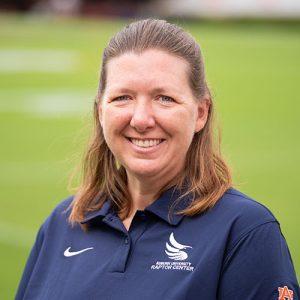
Stephanie, a native Floridian, holds a Bachelor’s degree in Interdisciplinary Zoo Sciences with a Minor in Business from the University of West Florida, and a Master’s degree in Natural Resources with a graduate certificate in Restoration Ecology from Auburn University. With over 20 years of experience, she has dedicated her career to working in wildlife rehabilitation facilities, zoos, aquariums, and veterinary clinics, handling hundreds of exotic and native wildlife species across various taxa, including mammals, birds, reptiles, and amphibians. Stephanie is a Certified Wildlife Rehabilitator (CWR) and Certified Euthanasia Technician (CET). Currently, she serves as the Assistant Director of Raptor Rehabilitation at the Auburn University Raptor Center, where she specializes in raptor rehabilitation. Additionally, she is the Co-Owner of Go Pro Wildlife Removal, LLC, a company that focuses on the humane eviction of nuisance wildlife from homes.
Constantinos Kyriakis
DVM, PhD
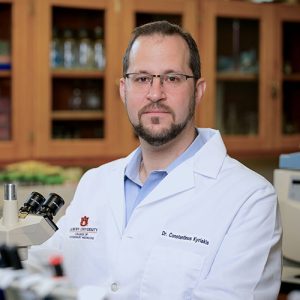
Dr. Constantinos Kyriakis completed his DVM studies in the Aristotle University of Thessaloniki in Greece and PhD in Ghent University, Belgium. Following postdoctoral research fellowships in Emory University and the University of Georgia, he joined the Department of Pathobiology at Auburn University and is currently an Associate Professor of Virology and Infectious Diseases. His research focuses on influenza epidemiology, ecology and evolution, interspecies transmission and adaptation, and the development and testing novel vaccines in preclinical animal models. His laboratory is part of the National Institutes of Health/National Institute of Allergy and Infectious Diseases (NIH/NIAID) Centers of Excellence for Influenza Research and Response (CEIRR), while he has authored more than 50 peer-reviewed publications and is actively engaged in teaching, mentorship, and scientific service.
Victoria Ledford
PhD, MA
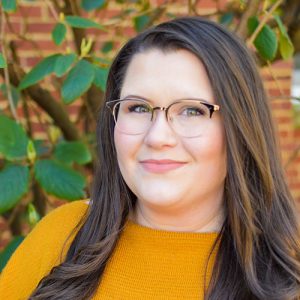
Dr. Victoria Ledford is an assistant professor of health communication in the School of Communication and Journalism at Auburn University. Her research investigates ways we can create persuasive health messages that avoid stigma and promote positive health beliefs, attitudes, and behaviors across a range of stigmatized contexts including opioids and autism stigma. She has also worked on applied and community-based research grants totaling nearly $2 million in external funding. At Auburn, she also runs the SHAPE lab which aims to shape better patient futures through the study of stigma, health, and patient experiences.
Christina Leyson
BS, MS, PhD

Dr. Christina Leyson a molecular virologist with special focus on respiratory viruses of poultry species. She has a special interest in viral pathogenesis, host adaptation, and evolution. Her research program aim is to design and implement evidence-based strategies to prevent and mitigate outbreaks using a blend of classical and cutting-edge virological techniques. Her ultimate goal is to share her love for viruses to all and to create a positive impact on human and animal health using virological research.
Ann Sullivan Ojeda
PhD, MS

Ann Sullivan Ojeda is an Associate Professor in the Department of Geosciences at Auburn University. Her research focus is to understand how groundwater connects humans to the geosphere. She integrates geochemistry and community-based research to addresses questions related to water quality and water contamination in rural communities. She combines classical geochemical techniques with health research to better understand the mechanisms of toxicity in humans and disease patterns related to impaired water quality. Ojeda earned a B.S. and M.S. in chemistry from Lyon College and Texas A&M University, respectively, and a Ph.D. in Geology from the University of Oklahoma.
Kathryn Reif
PhD, MSPH
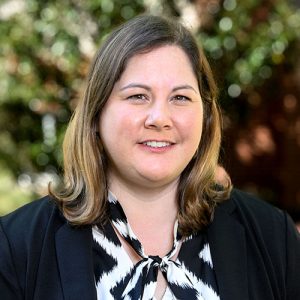
Dr. Kathryn Reif is the Bailey-Goodwin Endowed Professor in Parasitology and an Associate Professor in the Department of Pathobiology at Auburn University. She serves as Vice President for the American Association of Veterinary Parasitologists and on the board of the Companion Animal Parasite Council. Her research integrates vector biology, veterinary parasitology, and applied disease control, with emphasis on tick and mosquito feeding biology, pathogen transmission, and ectoparasiticide efficacy. Her work bridges fundamental vector biology with practical approaches to parasite and vector-borne disease prevention for veterinarians, animal owners, and the public.
Molly Simonis
PhD, MS

Dr. Molly Simonis is an Assistant Professor at Auburn University, dually appointed in the College of Forestry, Wildlife, and Environment and the College of Veterinary Medicines Department of Pathobiology. As a disease ecologist and ecoimmunologist, research in her lab focuses on how intrinsic and extrinsic stressors impact wildlife immunity and infection outcomes, and how those outcomes may threaten wildlife populations or pose zoonotic spillover risks. To answer research questions surrounding wildlife health, the Simonis Lab combines field sampling of wild bats, laboratory diagnostics, and empirical and theoretical quantitative methods.
Amberly Sokoloff
VMD

Dr. Amberly Sokoloff attended veterinary school at the University of Pennsylvania and then completed a residency in Avian and Exotic Pet Medicine and Surgery at the University of California, Davis. It was there that Dr. Sokoloff further developed a love of raptors, caring for birds at the California Raptor Center. Dr. Sokoloff joined the Auburn University Raptor Center in 2023 as lead veterinarian and is a Clinical Veterinary Fellow at the AU College of Veterinary Medicine. She is honored to provide top-tier medical and surgical treatment for rehabilitation patients and ambassador birds as well as to educate future veterinarians and veterinary technicians about how to care for these amazing animals.
Erin M. Sorrell
PhD, MSc

Erin M. Sorrell, PhD, MSc is a Senior Scholar at the Johns Hopkins Center for Health Security and an Associate Professor in the Department of Environmental Health and Engineering at Johns Hopkins Bloomberg School of Public Health. She also serves as Director of the Elizabeth R. Griffin Program at the Center. Her research portfolio combines the disciplines of basic science, biosafety, and one health systems strengthening to develop and apply a variety of methodologies to map, assess, and address both the structure and function of one health systems in collaboration with partners across government, international organizations, and academia. Erin received her BS from Cornell University in animal science and her MSc and PhD in virology from the University of Maryland, College Park.
Wes Stubblefield
MD, MPH, FAAP
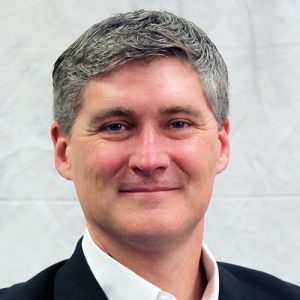
Dr. Wes Stubblefield is a district medical officer with the Alabama Department of Public Health covering the northern and northeastern districts. Originally trained as a pediatrician, Dr. Stubblefield practiced general pediatrics for over 14 years before joining ADPH. While practicing pediatrics, he held leadership positions at local, regional, state, and national levels. He completed his M.P.H. at UAB in 2018 and transitioned to a full-time public health role in 2021.
Natalie Wendling
DVM, MPH, DACVPM

Dr. Natalie Wendling is the domestic One Health coordination lead for CDC’s One Health Office. She provides leadership and expertise for One Health coordination across the federal government and supports emergency response efforts for emerging infectious diseases, zoonoses, and other One Health threats in the United States. She earned a Doctor of Veterinary Medicine from Auburn University and a Master of Public Health from the University of Iowa. Dr. Wendling also has experience as a Veterinary Medical Officer with USDA’s Animal and Plant Health Inspection Service, where she contributed to animal disease surveillance and outbreak responses. She is a lieutenant colonel in the U.S. Army Reserve and serves as a Veterinary Preventive Medicine Officer.