
Beyond the liver: Auburn researchers investigate alcohol’s hidden target
Inside every human cell exists a microscopic cleanup crew responsible for removing damaged materials and keeping essential systems running smoothly. Researchers from Auburn University’s College of Veterinary Medicine have found that chronic alcohol use can disrupt the cellular maintenance process in the gut, weakening its protective barrier and setting off a chain reaction that contributes to liver disease.
“The gut is especially important because alcohol can weaken its protective barrier, allowing harmful bacterial products to reach the liver and worsen inflammation and injury,” said Dr. Paul Thomes, associate professor in the Department of Anatomy, Physiology and Pharmacology. “Therefore, understanding alcohol-related liver disease also requires understanding what happens in the gut.
“Although heavy alcohol consumption is known to damage multiple organs, the cellular mechanisms underlying this damage are not fully understood.”
Co-authored by Auburn College of Veterinary Medicine postdoctoral researchers Drs. Murugadas Anbazhagan and Ahmed Bakheet, University of Nebraska Medical Center Associate Professor Dr. John D. Dickinson, Rush University Professor of Internal Medicine Dr. Ali Keshavarzian, Auburn University graduate student Nghi V. N. Tran, and Wayne State University Professor Dr. Tin Nguyen, the study was recently published in eBioMedicine.
A cellular recycling system under attack
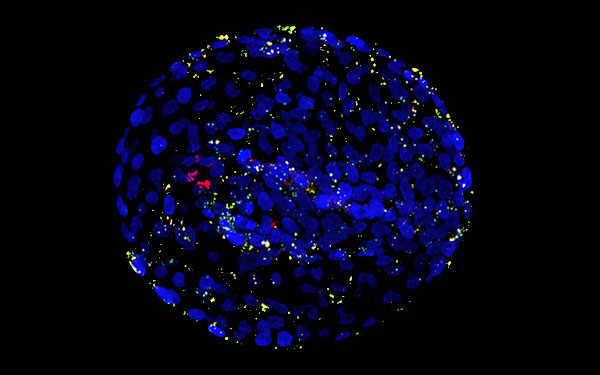
At the center of their work is a process called autophagy, which literally means “self-eating.” Despite its description, autophagy covers one of the body’s most important housekeeping functions. Cells use the process to identify, break down and recycle worn-out components before they accumulate and cause damage.
“It is an essential survival mechanism,” Thomes said. “Through autophagy, cells break down and recycle damaged organelles, unwanted proteins, and other cellular components that could otherwise accumulate and cause harm. This process helps maintain healthy intestinal cells, eliminate invading bacteria, and supports the gut’s protective barrier. Autophagy is linked to healthy aging and longevity. When this recycling system is disrupted, damaged components accumulate, contributing to cellular dysfunction and disease.”
The researchers discovered that alcohol disrupts this recycling system throughout the intestine. More importantly, the effects were not uniform. Different parts of the small intestine responded differently, and even neighboring groups of cells reacted in unique ways.
“What surprised us most was how differently the gut’s protective cellular recycling systems responded to alcohol, even within the same intestine,” Thomes said. “The response varied between the upper part of the small intestine, where much of the alcohol is absorbed, and the lower part, where cells encounter more gut bacteria. It also differed between cells that absorb nutrients and cells deeper in the intestinal lining that produce new cells to replace old or damaged ones. These findings helped us identify specific regions and groups of cells within the small intestine that are particularly susceptible to alcohol’s effects.”
Why a “leaky gut” matters
The intestine normally functions as a tightly regulated gatekeeper. It allows nutrients to enter the bloodstream while preventing bacteria and bacterial toxins from crossing into the body.
If you’ve ever heard the term “leaky gut,” it’s an appropriate description of the protective barrier becoming more permeable as alcohol disrupts autophagy and related cellular processes. Harmful bacterial products can then pass through the intestinal lining and enter circulation. Ultimately, since blood from the gut flows directly to the liver, those substances are delivered straight to an organ already stressed by alcohol metabolism.
The team found evidence that impaired autophagy was linked to increased intestinal permeability, elevated bacterial toxins in the bloodstream and liver, and worse alcohol-induced liver injury.
A more complex picture of alcohol damage
The findings challenge the idea that alcohol affects the intestine in a simple, uniform way. Instead, the research suggests the gut responds in highly localized patterns depending on where cells are located and what functions those cells perform.
This may help explain why some areas of the intestine are particularly susceptible to alcohol-induced injury and why alcohol-related disease can be so difficult to predict and treat.
“Our findings suggest alcohol-related gut damage is more complex than previously understood,” Thomes said. ” Different regions of the intestine and groups of cells have different vulnerabilities to alcohol, meaning that studying only one part of the intestine may not capture the full extent of its effects.”
Future treatment pathways
The study does not immediately change patient care, but it points researchers toward promising new therapeutic targets. Because autophagy and lysosomal pathways help protect intestinal cells from damage, restoring those pathways could someday help prevent or reduce alcohol-related liver disease.
With the support of the National Institutes of Health (NIH), Thomes and his colleagues continue to focus on identifying specific drug targets and determine whether existing medications could be repurposed to restore these protective cellular systems.
“Our findings highlight autophagy and lysosomal dysfunction as potential factors driving disease progression, although further human studies and clinical validation are needed before these findings can guide patient treatment,” Thomes said.
Research