
Change the Culture, Save the Vulture
The first Saturday of September is one of our favorite days here at the Auburn University Raptor Center (AURC). International Vulture Awareness Day (IVAD) is a time when vulture lovers around the world come together to celebrate these remarkable birds. To some people, it may seem strange to find vultures beautiful, clean, or even cute, but they are all of those things and much more!
Vultures play a critical role in keeping both wildlife and ecosystems healthy. As nature’s cleanup crew, they quickly dispose of animal carcasses before disease can spread. Their stomach acid has a pH of around 1, similar to that of battery acid, allowing them to destroy dangerous pathogens such as rabies, anthrax, botulism, and distemper. Rather than spreading disease, vultures help prevent it.
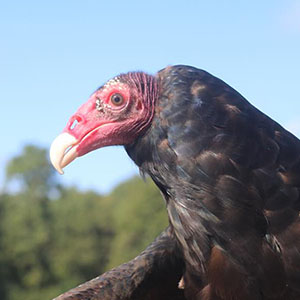
They are also far more intelligent than many people realize. Vultures learn foraging behaviors from one another, remember reliable feeding locations for years, can be trained to distinguish colors, and some species have even been observed using tools to break open eggs. These highly adaptable birds are an essential part of ecosystems across the globe.
Today, are 23 species of vultures worldwide. Unfortunately, over half of those species are classified as Near Threatened, Vulnerable, Endangered, or Critically Endangered. While vultures face different challenges depending on where they live, many populations have experienced dramatic declines.
In Asia, 99% of their vulture populations were lost due to the veterinary drug diclofenac. When livestock treated with the drug died, vultures feeding on their carcasses suffered acute kidney failure. Although diclofenac was banned for veterinary use in many countries in 2006, vulture populations are still recovering from these devastating losses. The decline of vultures also had serious consequences for human health. Without enough vultures to quickly consume animal carcasses, more carrion remained on the landscape, providing a food source for feral dogs. As dog populations increased and had greater access to carcasses that could carry disease, the risk of rabies transmission grew. Researchers estimate this contributed to more than 38 million additional dog bites and over 47,000 human rabies deaths across the region.
In Africa, vultures face a different set of threats. Electrocution and collisions with power infrastructure are major causes of mortality. Poisoning is another significant issue, both intentional and unintentional. Poachers sometimes lace carcasses with poison to kill vultures, preventing authorities from spotting circling birds that could reveal illegal poaching activity. Farmers may also unintentionally poison vultures while attempting to control predators that threaten livestock.
Here in the United States, Black Vultures and Turkey Vultures are common sights across Alabama. While their populations remain stable, they still face many challenges, including vehicle collisions, lead poisoning, rodenticides, and illegal shooting. Vultures have long suffered from an undeserved bad reputation. Many myths portray them as symbols of death or misfortune. Growing up, I often heard that vultures circling overhead meant they were waiting for something to die. In reality, these birds are usually taking advantage of rising columns of warm air called thermals, which allow them to travel long distances while conserving energy.
Even today, vultures continue to suffer from lead poisoning when they consume carcasses containing fragments of lead ammunition. The California Condor, North America’s largest vulture species, was brought to the brink of extinction largely because of lead exposure, and lead remains a significant conservation challenge.
Fortunately, there are many ways each of us can help protect vultures.
- Properly dispose of food waste and trash to avoid attracting animals to roadsides, where they are more likely to be struck by vehicles and subsequently attract scavengers.
- Reduce or eliminate the use of rodenticides, which can poison wildlife that consume affected rodents.
- If it is safe to do so and you have the proper training and protective equipment, move roadkill farther from the roadway to reduce the risk of vehicle collisions with scavenging birds.
- Consider using non-lead ammunition when hunting to help reduce lead poisoning in scavengers.
- Support organizations dedicated to vulture conservation, research, and breeding programs, such as VulPro, 4 Vultures, the Vulture Conservation Foundation, and The Peregrine Fund.
- Create art, host fundraisers, or participate in community events that raise awareness and support conservation efforts.
Most importantly, educate.
Educate your friends. Educate your family. Educate your community.
Vultures are often misunderstood, yet they provide invaluable services that benefit people, wildlife, and the environment. By challenging misconceptions and sharing the truth about these incredible birds, we can help ensure a future where vultures continue to thrive.
After all, if we want to save the vulture, we must change the culture.