
Animal Behavior, Cognition, & Olfaction Research
Dr. Lazarowski’s research examines behavior and cognition in animals, with a particular focus on working dogs and the factors that influence their development, training, performance, and welfare. Her research includes cognitive, behavioral, physiological, and neuroscience approaches.
Current Research Topics:
- Individual differences in behavior and cognition and how they relate to successful training and performance in working dogs
- Olfactory learning and behavior of scent detection animals of canine and other species
- Early life factors and puppy development
- Effects of aging on behavior and cognition
- Welfare and enrichment for working dogs
- Effects of human-animal interactions on both human and working dog well-being
Research Team
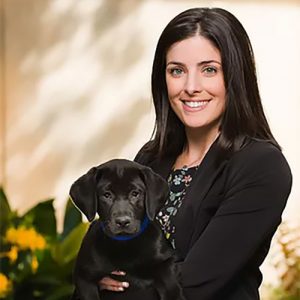
Lucia Lazarowski, PhD, CAAB
lzl0017@auburn.edu
Dr. Lazarowski is a Research Assistant Professor in the Department of Anatomy, Physiology, and Pharmacology in the Auburn University College of Veterinary Medicine. She also serves as Chief Behavioral Scientist for Canine Performance Sciences, and Co-PI of the Detection Canine Sciences, Innovation, Technology and Education (DCSITE) program. Dr. Lazarowski teaches Veterinary Ethology in the DVM curriculum, and is an adjunct professor in the Department of Psychological Sciences. She is credentialed as a Certified Applied Animal Behaviorist (CAAB) by the Animal Behavior Society; please note that Dr. Lazarowski does not currently provide private behavioral consultations.
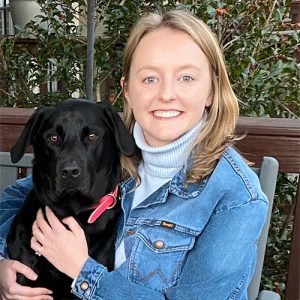
Sarah Krichbaum, PhD
Dr. Krichbaum is a Research Fellow in the Canine Performance Sciences program. She received her MA in psychology from the University of North Carolina Wilmington and her PhD in Cognitive and Behavioral Sciences at Auburn University. Her primary research interests include working dog welfare, aging, and memory.

Jordan Smith, PhD
Dr. Smith is a Research Fellow in the Canine Performance Sciences program. She received her MA and PhD in Cognitive and Behavioral Sciences at Auburn University. Her primary research interests include behavioral and cognitive factors impacting working dog success, with a focus on early life experiences.

Lane Montgomery, MS
Lane is a Graduate Research Assistant with Canine Performance Sciences. She is a PhD candidate in the Department of Psychological Sciences Cognitive and Behavioral Sciences program, mentored by Dr. Jeff Katz.

Courtney Collins-Pisano, MS
Courtney is a Graduate Research Assistant with Canine Performance Sciences. She is a PhD candidate in the Department of Psychological Sciences Cognitive and Behavioral Sciences program, mentored by Dr. Jeff Katz.
Krissy Busby
Krissy is a Graduate Research Assistant with Canine Performance Sciences. She is currently pursuing her Masters degree in the Department of Psychological Sciences Cognitive and Behavioral Sciences program, mentored by Dr. Jeff Katz.
Former Students
- Emma Cox, PhD (Psychological Sciences)
- Chloe Hume, DVM student (2024 Boehringer Ingelheim Veterinary Summers Scholar)
- Ashton Pearson, DVM (2021 Boehringer Ingelheim Veterinary Summers Scholar)
Get Involved
Various opportunities are available for students interested in animal behavior. Opportunities depend on current projects and availability. Interested students should reach out to Dr. Lazarowski to discuss available opportunities.
- Graduate Students: Graduate students interested in research opportunities must be enrolled in a graduate program with a primary advisor in their department. Graduate assistantships with Canine Performance Sciences depend on the availability of funding. Graduate students may also get involved in research on a voluntary basis, through research credit hours (e.g., VMED 9602), and inter-departmental collaborations.
- Undergraduate Students: Undergraduate students at Auburn may participate in research opportunities as a volunteer or by enrolling in research credit hours through their department (e.g., VBMS 4980, PAOH 4980, PSYC 3910/3940). Students may be enrolled in a variety of departments such as the Department of Psychological Sciences, Public and One Health, Biomedical Sciences, Animal Science, and Wildlife Sciences.
- DVM Students: Opportunities for veterinary students interested in animal behavior research include volunteering, enrolling in directed independent research credit hours (VMED 9602), and the Veterinary Summer Scholars program (VMED 9970).
- Internships: Research internships are occasionally available for students within and outside of Auburn University. Availability and funding varies by semester.